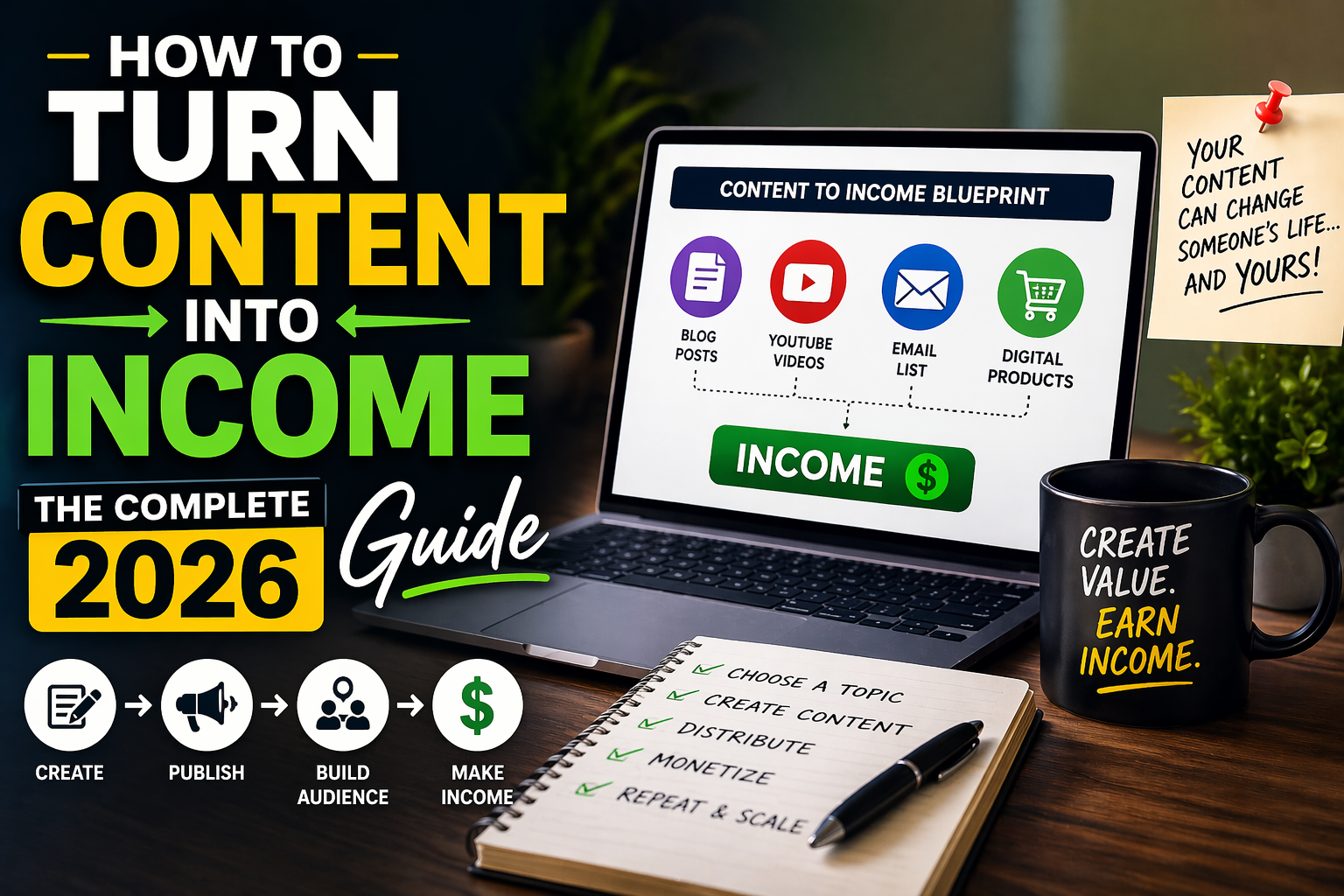
Based on the latest trends and data, here is a comprehensive, step-by-step guide on how to turn your content into a diversified income stream, from your website to every other platform. We’ll break it down by content type and explore the core strategies that are working for creators right now.
📊 Step 1: Understand the Market Potential
Before diving into specific methods, it’s important to grasp the scale of the opportunity. The creator economy is a multi-billion dollar industry that continues to experience explosive growth.
- Market Size: The global creator economy market is estimated to reach between $180 billion and $254 billion in 2025, with projections to surpass $1.3 trillion by 2035.
- Ad Spend: In the U.S. alone, creator ad spend is expected to hit $37 billion in 2025, growing four times faster than the rest of the media market.
- Growth Potential: Full-time creators are projecting an average 78% revenue growth in 2026, driven by diversifying their income streams.
This data shows that content is not just a hobby; it’s a serious business asset.
💡 Step 2: Adopt the Right Mindset: Content as a Product
The most successful creators don’t just make posts; they build businesses. They view their content as a “product” with a price, a promise, and a means of renewal. As industry experts note, the goal is to “monetize content with intent,” focusing on where your audience’s attention is and stacking revenue models for sustainability. The key is to stop relying on a single income stream, like platform ad revenue, and instead build a “layered monetization engine.”
🛠️ Step 3: Implement Core Monetization Strategies (That Work for All Content)
These are the foundational methods that can be applied to a blog, a YouTube channel, a podcast, or a social media presence.
🤝 Affiliate Marketing: Earn Commission on Recommendations
This is a performance-based model where you earn a commission for promoting another company’s products or services. You share unique tracking links, and when your audience clicks and buys, you get a percentage of the sale.
- Facts & Figures: Commission rates typically range from 5% to 30%, with digital products and software-as-a-service (SaaS) offering the highest rates. Some SaaS programs offer commissions as high as 20% to 70% due to recurring revenue models.
- How to Get Started: Join affiliate networks like Amazon Associates, ShareASale, or Impact. Integrate product links naturally within your content, such as in “best of” lists, tutorials, or product reviews.
📢 Sponsored Content & Brand Collaborations
Brands will pay you a flat fee to create content that features their product or service. This is one of the most direct ways to get paid.
- Facts & Figures: U.S. sponsored content revenue is projected to reach $10.52 billion in 2025. Sponsorship rates are increasing, with mid-tier influencers seeing their earnings per deal jump from $5,000 to $10,000 or higher.
- How to Get Started: You don’t need millions of followers. Micro-creators (1,000-50,000 followers) are in high demand because their audiences are more engaged and trusting. You can pitch brands directly or use influencer platforms like Afluencer or AspireIQ.
- Quotes from Successful Creators: As lifestyle creator Savián Jordan explains, the real money isn’t in platform views.
"I can charge $10,000 for a 60-second (video), and brands say 'OK,'"she said, but emphasizes that income from deals is the bulk of her earnings.
🔄 Repurposing & Upcycling Existing Content
Your old content is a hidden goldmine. Instead of letting it sit in an archive, you can transform it into new formats to reach new audiences and unlock new revenue.
- Facts & Figures: The strategy of reusing content can turn archives into “engines of engagement and monetisation”. For example, brands earn an average of $6.50 for every $1 spent on influencer-generated content, and repurposing that content can further boost its return on investment (ROI).
- How to Do It: Turn a popular blog post into a YouTube video or a podcast episode. Compile a series of related posts into a paid eBook or online course. Use AI tools to generate social media snippets, email topics, or even short-form videos from long-form written or audio content.
- Quotes from Successful Creators: One content creator shared their experience, saying they were able to
"package that content into new products (eBooks, online courses, guides, PDFs, etc.) with a fresh coat of paint, more relevant for the current audience."The result was “earning significant revenue from content I’d already made”.
📝 Step 4: Monetize Specific Content Types
Here is how to apply these and other strategies to your website and specific content formats.
💻 Blog Content (Your Website: thenextinternetbillionaire.com)
Your website is your most valuable asset because you own it and control the monetization. Your blog, focused on business intelligence, is an excellent niche for making money.
- Join an Ad Network (Passive Income): Place display ads on your blog. The most common is Google AdSense. As your traffic grows, you can join premium networks like Raptive or Mediavine, which offer higher revenue per thousand impressions (RPM).
- Offer Services (High-Value Income): Use your blog as a portfolio. You can offer business intelligence consulting, data analysis services, or content strategy sessions. This is one of the highest-value ways to monetize your expertise.
- Sell Digital Products (Scalable Income): Package your knowledge into downloadable products. This could be:
- An eBook on “The Top 10 BI Tools for Small Businesses.”
- Templates for data dashboards or performance reports.
- A mini-course or workshop on how to interpret data for better decision-making.
- A paid subscription or membership that gives users access to premium articles, monthly data trend reports, or a private community.
- Real-World Examples: Well-established bloggers can make significant income. Ryan Robinson, who blogs about blogging, makes over $30,000 per month. Adam Enfroy generated a seven-figure income from his blog within two years. A 2025 survey shows that while the first few years can be slow, veteran bloggers (10+ years) earn an average of $5,624 per month.
📹 Video Content (YouTube & Social Media)
Video is the most engaging content format, and the monetization options are vast.
- Ad Revenue (YouTube Partner Program): Once you meet YouTube’s eligibility requirements (1,000 subscribers and 4,000 watch hours), you can earn a share of ad revenue. On average, creators earn between $5 to $15 per 1,000 ad views, though this varies widely by niche. Finance and tech channels often earn much more.
- Channel Memberships & “Supers”: This allows your most loyal viewers to pay a recurring monthly fee for exclusive perks like badges, emojis, and members-only content. This is a key part of building a “layered monetization engine”.
- Sponsorships & Brand Deals: As discussed, this is often the primary income source for successful YouTubers. A channel with 100,000 subscribers can earn between $5,000 and $15,000 per month by combining ad revenue with brand deals.
- Affiliate Marketing: Link to products in your video description. This is highly effective for tech review, software tutorial, and “how-to” channels.
- Quote from a Successful Creator:
"MrBeast has banked a total of $85 million,"topping Forbes’ list of the highest-paid creators in 2025, showcasing the immense earning potential at the top end.
🎙️ Podcast Content
The podcast advertising market is booming, offering a variety of ways to earn money.
- Sponsorships & Ads: You can get paid to read an ad (host-read) or play a pre-recorded ad. The standard metric is CPM (cost per thousand listeners), which can range from $18 to $25 for host-read spots. You don’t need a massive audience to start; you can begin with smaller, niche sponsors.
- Listener Support & Memberships: Platforms like Patreon or Buy Me a Coffee allow your audience to support the show directly. You can offer ad-free episodes, bonus content, or early access in exchange for a monthly donation.
- Repurposing to YouTube: A major trend is “video podcasting,” where you film your podcast and upload it to YouTube. This opens up a new audience and allows you to tap into YouTube’s ad revenue and membership features. Over 500,000 video podcast shows now exist on Spotify alone, and 390 million users have streamed one, marking a 54% increase in adoption.
- Live Events & Merchandise: As your audience grows, you can host live shows, either in-person or virtual, and sell branded merchandise.
- Facts & Figures: The global podcast ad spend is projected to hit $2.55 billion in 2025. A key reason it’s so effective is that 82% of listeners take action after hearing a sponsored message on a podcast.
🖥️ Online Courses & Digital Products
This is one of the most scalable and profitable ways to monetize your expertise.
- Choose a Platform: You can use marketplaces like Udemy (which takes a large commission) or host your own course on platforms like Teachable or Kajabi, allowing you to keep over 95% of the revenue.
- Pricing Your Course: This is a critical step. Pricing can range from $47 for a mini-course to over $1,000 for a comprehensive flagship course. Many experts recommend pricing comprehensive courses well above $100 to reflect their value.
- Use Tiered Pricing: Offer different levels of access (e.g., basic, premium, VIP) at different price points to appeal to a wider audience.
- Create a Subscription Model: Instead of a one-time sale, offer ongoing access to a library of courses for a monthly fee, creating predictable recurring revenue.
📱 Social Media Content (Short-Form & UGC)
Monetizing short-form video is less about platform payouts and more about leveraging the audience you build.
- User-Generated Content (UGC): This is a powerful and often overlooked method. You don’t need any followers to get started. You create videos for a brand to use in their own advertising, and they pay you a flat fee for the content.
- Affiliate Marketing on Socials: Use your bio link and story links to promote products. This is a primary income stream for many creators.
- Creator Funds & Bonuses: Platforms like TikTok and YouTube have funds that pay creators for popular content. However, the payout is small. Most creators on TikTok earned between 2 to 4 cents per 1,000 views in 2025, which is only $20 to $40 per million views. Denise Rivers-Nickelberry, a creator with over 133,000 followers, says,
"Social media platforms don't pay much. Maybe a little, but it's not livable."This reinforces the need to diversify your income.
🎯 Step 5: Put It All Together – A Sample Action Plan for TNIB Website
Here is a specific, actionable plan for thenextinternetbillionaire.com, which focuses on Business Intelligence:
- Phase 1: Optimize & Monetize the Blog (Months 1-3)
- Goal: Build consistent traffic and lay the foundation for ad revenue.
- Actions:
- Analyze Existing Content: Use your website analytics to identify your top-performing blog posts on BI tools, data analysis, etc..
- Apply SEO: Optimize these high-performing posts with relevant keywords to attract more organic traffic from search engines.
- Implement Ads: Join Google AdSense to start earning passive ad revenue.
- Write Sponsored Content: Once you have consistent traffic, start writing in-depth reviews of BI software tools for a fee.
- Phase 2: Build High-Value Income Streams (Months 4-8)
- Goal: Introduce higher-value, scalable revenue streams.
- Actions:
- Create a Lead Magnet: Offer a free PDF, like “The Ultimate Checklist for Choosing BI Software,” in exchange for an email address.
- Develop a Digital Product: Compile your best blog posts into a paid eBook, e.g., “A Beginner’s Guide to Leveraging Data for Business Growth.”
- Launch a Mini-Course: Create a 1-hour video workshop on “How to Build a Simple Dashboard with Excel” and sell it for $47.
- Phase 3: Diversify and Scale (Months 9-12+)
- Goal: Expand your reach and build a community-driven, recurring revenue model.
- Actions:
- Start a Podcast: Interview experts in the BI field and repurpose your blog posts into podcast episodes. Monetize with sponsors.
- Create a Membership Site: Offer a monthly subscription that provides access to premium content like monthly industry trend reports, a private Slack community for Q&A, and templates.
- Offer Consulting Services: Use your website as the main funnel for offering one-on-one business intelligence consulting calls.
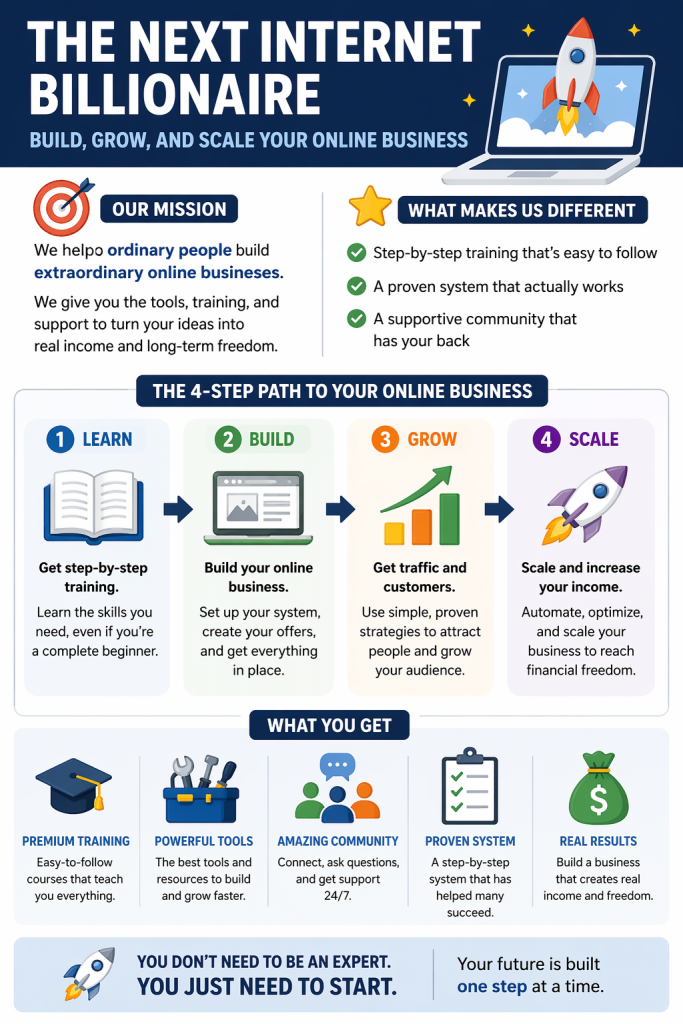
In conclusion, by following these steps, you’re not just creating content; you’re building a diversified business portfolio. The journey from content creator to “The Next Internet Billionaire” is a marathon, not a sprint. It requires strategy, consistency, and a willingness to learn and adapt. But as the data shows, the opportunity is enormous. Good luck on your journey!
Something to consider:
Before you start building your online income system, you need to understand the tools that will power your productivity. This guide covers the best AI tools available today:
👉 https://ideainitself.com